
Understanding EPR in the U.S.
More states are implementing Extended Producer Responsibility laws, creating new reporting obligations, producer fees, and compliance requirements.
For companies selling across multiple states, EPR quickly becomes a complex compliance and data challenge. EPR is not one program. It’s a growing network of state-specific requirements.
Key EPR Program Categories in the U.S.
Packaging and paper products (PPP)
Packaging EPR is one of the fastest-growing compliance areas in the U.S.
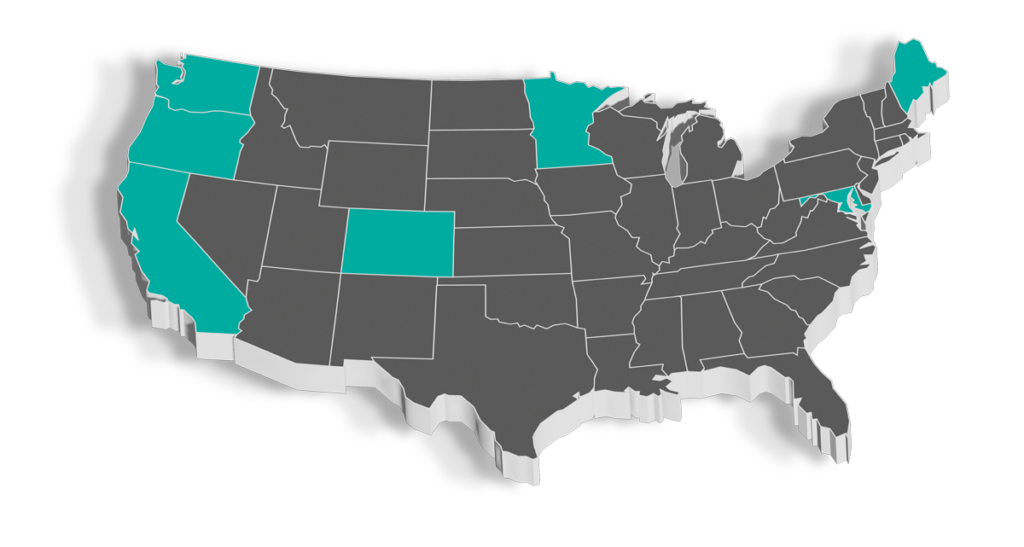
Several states have enacted packaging EPR laws, including California, Colorado, Maine, Maryland, Minnesota, Oregon, and Washington. These programs generally require obligated producers to register, report covered materials, pay producer fees, and participate in approved producer responsibility systems.
Packaging EPR can apply to materials such as:
- Plastic
- Cardboard
- Glass
- Metal
- Flexible packaging
- Printed paper and paper products
- Food serviceware
For producers, the biggest challenge is often data. Packaging weights, material classifications, product volumes, and state-level sales data must be structured in a way that supports accurate reporting.
Evnia helps producers: collect packaging data, classify materials, calculate fees, prepare reports, and manage submissions across multiple states.
Deposit-return and beverage container programs
Deposit-return systems are not always described as EPR programs in the same way as packaging or textiles, but they place clear end-of-life management and fee-related obligations on producers, distributors, or beverage brands.
These programs can involve:
- Beverage container registration
- Container material reporting
- Deposit and handling fee obligations
- Sales data reporting
- Coordination with state systems or redemption networks
For producers selling beverages across multiple states, deposit-return obligations can create a separate layer of reporting complexity.
Evnia helps producers: organize container data, support reporting workflows, and align deposit-related requirements with broader EPR compliance processes.
Textiles
Textile EPR is emerging as a new compliance frontier in the U.S.
California has moved forward with a textile EPR framework under the Responsible Textile Recovery Act. Producers of covered products must join the Producer Responsibility Organization (PRO) by July 1, 2026.
Textile EPR may affect producers of products such as:
- Apparel
- Footwear
- Household textiles
- Textile-based consumer products (bags, etc.)
For many companies, textile EPR will require a new level of product data, brand ownership review, and producer obligation analysis.
Evnia helps producers: assess potential obligations, prepare registration data, organize product scope, and monitor evolving textile EPR requirements.
Paint
Paint is one of the more established EPR categories in the U.S. Products targeted include house paint as well as primers, stains, sealers, and clear coatings such as shellac and varnish.
PaintCare, a nonprofit stewardship organization created by paint manufacturers, operates paint stewardship programs in 12 states and the District of Columbia.
Paint programs may involve:
- Producer registration
- Sales reporting
- Stewardship fees
- Product scope analysis
- Coordination with PaintCare or applicable state programs
Evnia helps producers: determine applicability, prepare sales data, support fee reporting, and manage compliance documentation.
Batteries, electronics, mattresses, and other regulated products
Beyond packaging, textiles, deposits, and paint, many U.S. states have EPR or product stewardship programs for other product categories.
These can include:
- Batteries
- Electronics
- Mattresses
- Carpet
- Mercury thermostats
- Gas cylinders
- Pharmaceuticals
- Tires
- Household hazardous products
For example, Connecticut’s product stewardship framework includes laws for electronic waste, paint, mattresses, mercury thermostats, gas cylinders, tires, and batteries.
These programs may not all apply to the same producers, but they show the direction of the U.S. compliance landscape: more product categories, more reporting, more fees, and more producer accountability.
Evnia helps producers: identify applicable programs, monitor regulatory updates, and coordinate reporting across multiple categories.
States With Packaging EPR Programs
| State | Law / Program | Primary Enforcement Authority | Penalties & Fines for Non-Compliance |
|---|---|---|---|
| California | Plastic Pollution Prevention and Packaging Producer Responsibility Act (SB 54) | CalRecycle | Up to $50,000 per day per violation |
| Colorado | Producer Responsibility Program for Statewide Recycling Act (HB 22-1355) | Colorado Department of Public Health & Environment (CDPHE) | 1st violation: $5K (day 1) + $1.5K/day continuing 2nd violation (within 12 months): $10K (day 1) + $3K/day 3rd+ (within 12 months) $20K (day 1) + $6K/day Plus, potential "prohibited from selling/distributing" |
| Maine | Stewardship Program for Packaging | Maine Department of Environmental Protection | Authorizes civil penalties and enforcement actions for failure to comply with stewardship and reimbursement obligations. Penalties are determined under existing state environmental enforcement authority. |
| Maryland | Packaging EPR Framework (program development phase) | Maryland Department of the Environment (MDE) | Enforcement mechanisms include civil penalties and corrective actions, with specific fines defined through program rules and advisory council recommendations rather than statute. |
| Minnesota | Packaging Waste and Cost Reduction Act | Minnesota Pollution Control Agency (MPCA) | Authorizes administrative penalties, compliance orders, and enforcement actions for failure to register, report, or pay required fees. Specific fine amounts are established through rulemaking rather than fixed statutory caps. |
| Oregon | Recycling Modernization Act (SB 582) | Oregon Department of Environmental Quality (DEQ) | Up to $25,000 per day for non-compliance |
| Washington | Recycling Reform Act | Washington Department of Ecology | Allows for civil penalties, corrective action plans, and enforcement orders for failure to participate in the EPR program once implementation. Penalty amounts are defined through agency rules. |
Other emerging programs
Additional states continue to explore or implement EPR legislation, increasing the need for scalable, multi-state compliance strategies.
Why U.S. EPR programs are difficult to manage
EPR programs are not only different by product category. They are also different by state.
A producer may need to understand:
- Who is considered the obligated producer
- Which products or materials are covered
- Which exemptions apply
- Which data must be collected
- Which reporting year applies
- Which PRO or agency manages the program
- What fees must be paid
- What documentation must be retained
This is where EPR becomes more than a regulatory topic. It becomes a data, finance, legal, compliance, and operational challenge.
Get Multi-State EPR Protection
EPR is expanding. More states are adopting programs. More product categories are being regulated. Reporting expectations are becoming more detailed.
Companies that build a scalable process early are better prepared to control fees, meet deadlines, and defend their reporting decisions.
Explore our EPR solutions and how Evnia can support your business.

Need help understanding your obligations?
Talk to an EPR Expert.
Whether you are preparing for your first report or managing multiple state programs, Evnia can help you navigate the complexity of EPR.
